Tuesday, November 25, 2008

Appearances

I was sitting the faculty lounge having lunch. Several others around me started comparing thoughts on hair style and care. My own powers of observation are limited, so that I tend not to notice that Lois has had a haircut unless I was forewarned. But I realized quickly enough as I listened that I am as vain as anyone else about appearance.

I observed that I used to have red hair. Some were sceptical, but the picture of Lois and me when we first were engaged shows the truth.


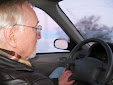
Their scepticism is easy to understand. Here we are today.


Lois tells me that white hair is good, and I am willing to believe her. I notice the thinning, the weathering, the truth that time passes whatever we feel like inside. When we left Pennsylvania to go back to school, after about nine years of marriage, we had become a small family.


Lois, Vaughn, and I -- ready to leave Speedwell heights for Wilmore. I think I was less concerned with appearance then. A kind of carelessness that went with being 36. Now I'm not so sure. I know that I am older, and I notice.

Speedwell had been good for us. I preached 45 to 50 Sundays a year. The picture below comes from my ordination service, with John Byers sitting behind me. Time passes, and John himself is gone now.


One of the things that I notice most now is my aversion to the sun. I can't stay long in the sun under any conditions. When we last travelled abroad, I remember trying to avoid the sun often. First picture, making sure that I'm under the roof of the bicycle taxis in London.


Then hiding under a blanket while an electrician works on our wonder car in the Kalahari desert.


In a way the last picture is a metaphor for appearances. Sometimes I don't want to be seen, not just by the sun. As I get older, I become aware of both sides: wanting to be noticed, and wanting to hide away. Appearances. Alternately showing off and hiding.
The chance conversation about hairstyles and colours is an excuse to remember what we look like. The shell of physicality that encloses our selves (these "ensouled bodies") matters more than we might think. In the end, the shell crumbles and the self remains, so that the shell of John in the picture above lies now in a grave. John himself is stronger than ever; but appearances matter. He has a new body (shell), Paul tells us.
It's good to remember what we have had and been; the memories are ourselves anyway.

Thursday, November 20, 2008

Banya

This afternoon I went to a Russian sauna, or banya. One of my colleagues has extensive experience in Russia and has taken advantage of Manitoba's similarity to the Russian winter to build himself a banya in his backyard.

He found a supply of cedarwood and built a shed with a small outer room. I entered the outer room and stripped off my clothes, hanging them on a hook. Glasses came off immediately: too much steam to see with them on anyway. A swimsuit (too much of a new comer to this sort of thing to consider au naturel), and I was ready to go further in and much hotter. My friend only makes the banya about 70 Celsius (about 160 Fahrenheit). We're not setting any records, but it feels warm in the early Manitoba winter.

Soon sweat drips from my face and body and every pore. I can't see well without my glasses in any case, and with sweat flowing freely down my face I spend most of the time with my hands wiping my eyes. Three other men are there. They all sit on the top seat (we have three levels in the small sauna). John pours water into a container on the woodstove, and steam fills the air.

After about 10 minutes one of the others leads the way out; he's the closest to a newcomer besides me. I sit on the bottom seat, where the heat is lowest. And I follow him out without hesitation. The four of us cool off outside. The snow just covers the ground, so no rolling around in the snow today. The two who are most experienced take cold water from a tap and pour it over themselves. I just cool off, grateful to be able to see again.

Then back inside. John adds oil with some peppermint to the water this time, and scent mingled with steam fills the air. Soon I am holding my hands over my eyes again. Another 10 minutes and my first banya of the year is over. I cool off outside, put my clothes back on, and head for home.

It's a good experience. Physically it helps to bring out anything inside the body that needs to be purged. The four of us found that the steam and heat and cold also greases conversation and friendship. Perhaps holding one's hands over one's eyes helps men to speak more easily ....

The banya over, I walked back to the main campus building with one of the others. The two stalwarts remained in the banya for another half hour. I fingered my glasses, waiting for the frames to shrink enough for my to reinsert the right lens. A hot metal frame combined with a cool plastic-glass lens makes for loss of lens: unanticipated consequences of the banya. Next time I'll leave my glasses outside the hut entirely.

Sunday, November 16, 2008

A Rocha

I've been reading a book that brings together two of my passions, the story of the founding of A Rocha in Portugal. Peter and Miranda Harris were working in an English pastorate (curacy, if you prefer) when God called them to begin a bird-watching conservancy, specifically as a Christian outreach in Portugal. Under Bright Wings is the story of how they began the venture now known as the A Rocha Christian Field Study Centre and Bird Observatory.

A Rocha means Rock -- on this rock I will build my church. We have built often enough on dubious foundations, some thought that we might gain some credit for growing the church. And we have seen efforts struggle and fail even when they seemed to be succeeding. The story Peter Harris tells does not include great numbers of people in the Algarve (where they lived) becoming Christian. It does, however, show that genuine Christian faith came to be possible for people who thought that the church was quite irrelevant to the challenges of living in Europe today.

I think of other ventures, such as the retreat centre at Taize in France. I am in more sympathy with the theology of A Rocha, which is (to my mind) evangelical; while the theology of Taize is less clear. But both incorporate Scripture and prayer at the centre of everything they do. A deep abiding desire to know God and be in close communion with God endures in the human spirit, even when our culture, indeed so much of the world, tries so hard to get rid of God completely.

When I think of my two passions: knowing God and treating God's creation with respect and care (what some call "environmentalism"): it is clear to me that treating the earth rightly (conservation) is a form of worship. Secularists who want to save the earth mean well (as they might say of me also!), but why should I bother if we can't succeed and if there's nothing after this life anyway. But caring for creation, expressing my love and obedience for the Creator who has given us this incredible gift we call "earth"; that's another matter altogether.

I don't need to pursue environmental causes with a deep need to succeed, and thus to despair of doing anything when human greed destroys another part of nature (or, more accurately, Creation). Instead, I can do what is right (from using less fossil fuel to recycling to keeping the yard neat and enjoying Lois' garden because in all of this I am celebrating the goodness of the Creator who gave us this wonderful gift we call "earth".

Thursday, November 06, 2008

Life Continues

The American Presidential Election is over (except where they're doing recounts, such as the Minnesota senate race). Obama won, for which I am grateful. I wanted change, which is his watchword. I want a government and country that is more willing to be part of the whole world and less ready to invade other countries. I want a country in which it's okay to disagree with each other, without having one's patriotism questioned. Obama has promised such a country, although we're the ones who will have to make it work.

When it comes to specific policies, I tend to be fairly conservative -- a registered democrat who can vote republican without a lot of difficulty. But I am also a part of the world. I have lived in too many different countries to buy into the neo-con vision of America as the world's conscience and policeman and governor.

So I'm glad; but I know that the real disagreements I have with Obama (for example, taking the right away from the States to legislate on abortion) will remain. Now that the electoral message has been sent: don't invade other countries; use our military in self-defense: I can consider republican candidates again. I know that many others who voted for Obama had other issues in mind, from the economy to a dislike of conservatives in general. Those issues aren't mine. I am conservative, and I can't say as I dislike liberals. Many good people are some of each. And the economy stems from problems far deeper than republican policies, not least the greed that is endemic to American society. Overspending on a war we did not need to fight has lessened our ability to deal with the economic crisis, and that war was my single most important issue this time around.

The sun came up today. God orders the stars and planets in their courses, and God brought another day, regardless of who we voted for. The stock market fell, and the economy continues its antics. Our car needed repairing, and the plumber fixed a problem with the water softener. Our dog looks out the window and welcomes us home ecstatically, and then sleeps beside me as I type. He's old enough (11 and 1/2) to know that companionship and love are more important even than elections. Meanwhile, the election is over and Obama won. Some of my friends think that's a bad thing, but God reigns anyway. I think we all won this time, but I know that the real truth is that God reigns and the sun came up this morning.

Postscript: We have a new bed, higher than our old mattress (the same one we had when we got married over 31 years ago!). We've sprayed for spiders. So finally I am sleeping better and back in my own bed. I don't know yet if the saga is over, or if something else is going on. i still have some unexplained bumps on my head -- not the Slagenweit kind, but swellings that come and go. They may be the after effects of three weeks of spider bites, or something else. Who knows? But the sun came up this morning, after a good night's sleep in my own bed.

Sunday, October 26, 2008

More Spiders and Stuff


First, a reminder of Autumn. We don't have all the sugar maple reds that we used to in Indiana, but we've had a gorgeous Fall anyway. By now, approaching the end of October, we are used to the weather having turned much colder. It will, but so far we've had lovely weather and the yard and garden remain beautiful. Lois' autumn joy (above) is a special delight.


And now the spiders. Or, if you prefer, spiderman (as my car pool mates call me). We have tried vacuuming out the bed, plugging up holes in the wall, everything except setting off Konk (a pressurized aerosol that kills everything in the room -- but I can't quite imagine sleeping in the residue). And I have still gotten bitten each night for the past three weeks. We have found two different friends who have had the same problem, so we know more about what's going on; but we still do not know what kind of spider is involved.
I did get a brief respite by sleeping in Nevin's room for two nights, well covered up. Last night I returned to my own bed, attired thus:

Socks tucked over the sweatpants, gloves pulled over the sweatshirt, and a mosquito net over my head. I'm not sure that it actually worked: things tend to gap when the wearer is asleep, and I may still have gotten a bite. But it gives me some sense of taking action while we try to find the spiders. If I hadn't killed one crawling over my ear a couple of weeks ago, I would think that the bites came from something else. But one of the two friends who had spiders described the nest she found: 20 some spiders quite small (1/2 inch across) and perfectly round (body like a little ball and legs also making a circle), a tan coloured body. The description matches the one that I killed.
They may be in our mattress, which is quite old. We can of course replace it. They may be in the wall. We'll do some spraying of baseboards and see what happens. Eventually I hope we get rid of them, and I can return to lying in bed comfortably, without putting on a suit of spider armour.

Tuesday, October 21, 2008

Spiders!

Some of my blogging friends do wonders with pictures. I wish I could take pictures of spiders, but as soon as I see them I squash them! I'm usually quite calm when I see a spider (or insects flying about the house): I tell Lois to kill them. But I have a good reason for becoming more active in my response.

I like spiders. They kill and eat other insects and keep the mosquito population (for example) under control. But at this moment I am in an uncharitable mood. Spiders bite! At least I think that's the problem. Here's my story.

Two weeks ago and a bit, I found a swelling on my neck. A couple of days later the swelling migrated to my left eye. Now I already feel self-conscious about the 58-year-old bags under my eyes. Usually I don't mind them: badges of honour I think. But when they fill with fluid and make me look puffy and drunk, I don't like them! At first I thought the swelling might be a reaction to a medication I had started taking. (One of those 50something things that 20somethings don't understand. I didn't 30 years ago. I do now.) I went to the doctor and showed him the original swelling and my puffy eye. He took me off the medication, but added that both looked more like the result of a spider bite to him than anything else.

So the saga began. I remember now that I have had similar swellings on my neck for some months, but disregarded them since they went away quickly enough. The doctor (who used to practice in Indiana) observed that our Manitoba spiders do not produce as severe a reaction as bites down south. That's good, but I kept checking for bites.

They came regularly. Over the past two weeks I have had bites on my scalp and neck almost every night. At least I think they're spider bites. The most compelling evidence came last week. I woke up to feel something on my ear, slapped at it, then turned on the light. Lo! A dead spider on my pillow! I thought, "Great! Now I can sleep without getting bitten!"

No such luck. The bites kept coming. Finally Sunday afternoon Lois and I pulled the bed out, cleared everything from under the bed (no more boxes of memorabilia there), and vacuumed carefully, including the baseboard. Lois performed a temporary plugging of a hole in the corner that could have been providing access for the spiders. Then we moved everything back into place.

Sunday night I tried to sleep, but Monday morning I found three more bites on my scalp, along with a puffy left eye. Back to the doctor, who saw no infection in the eye, so no real problem, but agreed that the bites were a nuisance. I also killed a spider that I found on the floor. I think it got lost trying to get back home after feasting on me! Lois had plugged its usual escape route, so it wandered about the floor until morning. I killed another downstairs this evening, which may or may not be connected to our bedroom spiders.

This morning I think there were no new bites. My eye has returned almost to normal. The swellings on my head have migrated together into one lump on the back of my neck, and I'm waiting to see what happens tonight.

"What happens to Lois?" I hear you ask. They don't bite her. If they did, I might suspect bed bugs or mites or some other pest. But she has escaped unscathed. She buries her head under the blankets every night, as she has for a long time. The spiders can't find her! So they crawl over the head they find -- mine. I've tried to copy her, but 58 years of sleeping habits can't be so easily undone. I think that all I've done is make sure that the bites are on my scalp.

I don't even know for sure that spiders are the problem. I do know that the swellings are not from the medication! I feel like I need my old mosquito net from sleeping in Zambia. If anyone has any advice or help for me, let me know!

Sunday, October 19, 2008

A Long Autumn

C. S. Lewis once wrote that old age was the best time of life, like Autumn. But like Autumn, he said, it doesn't last. Old age, or maturity past the full flower of summer.

We are having a delightful Fall in Manitoba. Our colours are not as showy as I remember from Indiana and Pennsylvania. In spite of the leaf on our country's flag, we have few red maples here: they are (I'm told) back in Ontario, which thinks it's Canada. (Hence the flag.) But the colours and temperatures and sun and clouds have all been lovely. Like a fading maturity.

I'm approaching 60 in another year and a half: maybe that's why I think of this. Sometimes getting older is a delight. To be with the wife of my youth (I was 27 years old then: it seems so young now, but it certainly did not at the time) for 31 years has been great joy. Another 31 years would bring me close to my father's age today. Which gives an idea of how old he was when I was born.

Sometimes I enjoy the Autumn, or at least late summer, the declining season of my life. Not always. Physical things that one shakes off quickly when young become more difficult to deal with. I exchange news of physical ailments with my friends in a way that no 2o something would think of doing! But most of the time I realize that God is good, and that Autumn is a wonderful season. Just too short -- especially in Manitoba.

The snow should come next month and stay until April, if past years are any guide. Meanwhile I listen to my jazz and world music, and work on my sermons and class lessons, and listen to people around me and listen for God's voice. Scott Peck said that the gift of our declining years is to be stripped of self-sufficiency so as to enter the presence of Omnipotence with an attitude of complete and total dependence: the only safe frame of mind with which to enter the presence of Omnipotence.

Autumn: long and warmly chill, coloured and shaded with reflective joy.

Thursday, October 16, 2008

Back Again

School has started -- almost halfway through the fall semester. I'm in a routine, sort of. Car pooling with several other people from Steinbach to Providence. Teaching class. Reading and assessing essays. Learning to know new people and situations, and trying to keep a genuine awareness of God at the heart of the whole process.

We've just finished an election in Canada. That vote was pretty easy for me: Go Green! It's a protest vote in our riding, where the Conservative candidate takes almost twice as many votes as all other candidates combined. I'm also hoping to help the Green Party gain enough of a percentage to get people's attention, especially political type people.

We could vote in the American election too, based on dual citizenship; but somehow I don't feel right voting twice. So I vote where I live at the moment. If I did vote in the States, again it would be an easy call. I have opposed the invasion of Iraq from the beginning, and the primary recourse our system has for expressing such opposition is by voting against the architects and their supporters.

Whoever wins (McCain or Obama), I feel more hopeful about the future. It's a funny thing that: I hear one person after another talking as though, if the other guy wins, we're doomed! Obama will be the end of freedom in our country! McCain will take us to war with everyone else! I doubt it. Both of them seem to me to represent positive change in our foreign policy. They differ more at home, but congress carries the greater responsibility to pass any legislation proposed. I'm looking forward to a change.

Bush? I feel real regret. I supported him once, and wish I still could; but the course he has taken have pushed me right away. I'm looking forward to the next presidency. It won't fix very much, but at least I hope it won't invade anyone else.

Sunday, February 17, 2008

Relating to People

I have a blog for a class I teach on World Religions. I posted this to that blog, and repeat it here.

A fuller title for this post could be "relating to people of other religions", but the title says what I want to say. We live in part of Manitoba that has a fairly high level of immigration. Once upon a time, immigration meant "more people like us" from Paraguay or Russia or Germany or Mexico. now it means people from all over the world. Filipinos make up the largest group of immigrants. Many others come from Asia and Africa. People who speak Low German and have a Mennonite background are no longer the overwhelming majority.

Christianity is still the primary religion represented among immigrants. But many from Europe are people who see their Christian or secular faith as so private that any question about faith makes them feel suspicious. Others from Asia and Africa are Muslims, Hindus, Sikhs, and Buddhists. Although the overwhelming majority of Steinbach is still at least nominally Christian, we have many neighbours who represent other religions. How should we relate to them?

The European answer meshes with the Canadian approach: "Faith is private, and none of your business." I must admit that I have trouble with this approach. Private belief issues in public action, and refusal to admit who I am inside makes it harder for others to deal with the choices I make in public.

The desire to keep faith private is based in good sense. We see people around the world engaged in conflict, and faith seems to be an integral part of those conflicts. So we teach tolerance for all people and keep quiet about our faith. Does the fact of faiths in conflicts mean that we should keep quiet about faith or religion? I don't think so.

Many people in Africa and Asia are quite comfortable talking about religion, without assuming that the person they are speaking with must convert to their faith. The real roots of conflict in our world are political and economic. People then use religion to energize the conflict already felt for other reasons. What we need a primary commitment to peace and to respect.

Tolerance is such a weak word. Respect is much stronger. I can talk to you and listen to you respectfully. I do not need to accept that you are right, if I don't think you are; but I do need to continue to treat you fairly and respectfully.

As I said above, private faith results in public actions; so I would like to know what faith is behind the way that people live. I want to know if someone is a Christian or a Muslim, a Buddhist or an Atheist, and so on. I want to be free to say what i am (a Christian), without having my rights as a Canadian placed in jeopardy. I want to continue to respect and accept and work with all people around me, as Jews or New Age or whatever they are, with the freedom to say who they are and who I am. I want to relate to whole people.

A common concern is that such openness will lead to proselytizing. I suppose it might. Sometimes Liberal Party members try to convince someone from the NDP that he/she would be more at home in the Liberal Party. Is that a bad thing to do? Sometimes people who discuss bringing a a power line down the west side of Lake Winnipeg try to convince others that west is better than east. Is it wrong for them to do so?

It would be wrong to mistreat people with whom we disagree politically. One should not, for example, give less money to one school district than to another because it voted for the other party in the last provincial election. Nor should one break friendship with someone because the other thinks that the power line should be laid along the bottom of the lake. But we find out what is right and true in a free exchange of ideas in which we can say what we truly believe.

Religion is no different. We treat people from other religions as people. If we find they don't want to talk about it, we don't press the issue. If we find they are willing to talk about matters of faith, we may talk. At the least, we should be free to say who we are without embarrassment and without proselytizing.

Wednesday, December 26, 2007

Christmas 2007

Our family has been watching old videos. Seventeen years ago we lived in Kentucky, then Zimbabwe, then Kentucky. Many memories surfaced as we watched the Heise family gathered together for our last time before Dad died. We sang hymns for about 45 minutes in February 1991, a wonderful time together even in death's shadow. Many more memories came with pictures of Mike and Lyn, and of the memorial to their daughter. We saw images of Zimbabwe, from Bulawayo to the Eastern Highlands, a beautiful country, so delightful, and today so ravaged by corruption and greed for power.

Memories are good. They remind us of who we are, for better or worse, and help ground our present existence. Those reminders took me off guard at times as we watched. During Vaughn's birthday party an old man carrying a bag stopped at the guest house, of which we were the hosts. I was taking the video of the children playing, and called out to him, "UBaba, tshaya ibell" -- ring the doorbell, father, implying that someone would take care of him.

I watched that clip, incidental to our family memories, and wondered at myself. Within the Ndebele culture an old man deserves respect. I showed some, by way of the courtesy of calling him "Baba", but I continued my own task of shooting the video. I wished as I watched that I had either stopped the video or handed it to someone else and walked over to him, greeted him with the courtesy due his years, and inquired after his health and life and finally his business with us. It would have cost me little, and would have also showed him a white person treating him with the kind of respect white people too rarely give to others.

In my regrets I wonder also if perhaps I wish this only because then I would have shown myself a better person. Such habits as caring genuinely for others are developed throughout a lifetime, not manufactured for the moment in Bulawayo.

For Christmas 2007 then, I have an early resolution -- to learn from the best of southern African cultures the value called "ubuntu": an acknowledgement of the other person's value as part of the human family, expressed in word and deed whenever I interact with others. This resolution I know I will break, but seeking to carry it out, a practice that takes a lifetime to perfect, is worth the effort.

Christmas Joy to all in my own family and in every part of our world.

Friday, November 02, 2007

Whose Religion?

I teach several courses that include questions about what is true, how we know what is true, and the like. A recurring theme is the fact that everyone has a perspective, a way of looking at life, a way of processing the raw data of reality that bombards us each day.

I remember learning about the beginning of the United States. My school days, when I learned such things, are long gone; but I remember among various influences the desire to be able to worship freely, without interference from the State. People who were religiously disenfranchised in Holland or in England found a place where they could worship according to their own conscience. The way that the United States encapsulated this religious freedom in the Constitution is one of our better moments. We have much to be ashamed of, and much to be proud of in our history. Enshrining religious freedom in the First Amendment and in our laws is one of our better actions.

Of course, the action has been interpreted in different ways throughout our history. Earlier in our life as a nation, the First Amendment functioned to prevent the new country making one denomination the official church of the new state. Americans who had left the established Church of England behind avoided establishing another church in their new country, even when it was the church of their own choice. More recently, as the United States becomes increasingly pluralist (religiously and culturally), the First Amendment has come to serve as a way to keep religion in general out of the public square.

The ACLU (American Civil Liberties Union) is well known for its activities in protecting the civil rights of Americans, often with respect to the First Amendment. A statement from its web page on religion is instructive:
"Some people, however, mistakenly use the word "public" when they really mean 'governmental.' This can be seen, for example, with Ten Commandments monuments. The right of churches and families to erect such monuments on their own property is constitutionally protected, regardless of whether it is public or private and regardless of whether someone is offended or not. A Christian cross that is fully visible from a public sidewalk is constitutionally protected when placed in front of a church. But if that same cross were moved across the street and placed in front of city hall, it would violate the Constitution. The issue is not 'religion in the public square' - as the rhetoric misleadingly suggests - but whether the government should be making decisions about whose sacred texts and symbols should be placed on government property and whose should be rejected."

I like what I see on the ACLU's web page. I agree with much that I find there. But their statement quoted above gets at the difficulty I feel. To express that difficulty, I digress into the history of my own church. The Brethren in Christ have roots going back to the Anabaptists, who began in Switzerland, Germany, and Holland at the end of the 16th Century. The Swiss Anabaptists in Zurich, Switzerland began as followers of Zwingli, and his movement against the Roman Catholic Church. I remember in seminary learning about the way that Zwingli and his young followers sought to purify the church in Zurich.

They cleaned out the decorations and symbols of the Roman church, scrubbing their sanctuary clean of all the religious symbols they could. There was one problem. The pulpit set in a clean sanctuary, with white walls and no other symbols, became a powerful new symbol, reflecting the new church's commitment to the preached word. The Anabaptists followed through on the power of the new symbol more consistently than did Zwingli, which became a basic cause of their own separation from him to form their own church.

In a similar way, a public square (or governmental square, in the ACLU terminology) scrubbed clean of religious symbols is itself a symbol of a particular religious commitment. The commitment to "no religion" is a commitment to secularism, in which secularism functions precisely as every religion always has.

One reason that some Christian conservatives have felt pushed out of public discourse in the United States (and in Canada, where I now live) is that they recognize, however vaguely, that their Christian religion has been supplanted by another religion. The problem is not that Christianity needs to be enfranchised, but that Secularism needs to be disenfranchised. What a genuinely free public/governmental square looks like is another question. In this essay I have tried to lay out a basic problem that operates within the USA and Canada, especially in the Academic community (where I make my living) and in that part of the public square which is controlled specifically by the government.

No new ideas here; just a problem to keep wrestling with: Whose religion does the country live by?

Monday, October 08, 2007

Thanksgiving Thoughts (with little reference to thanksgiving)

Today is Thanksgiving Day in Canada. I am grateful that Lois continues to recover, although with occasional headaches and mild mood swings. A concussion will do that to you! We are expecting two families to join us for supper -- one from Zambia, and one from Singapore/Korea. It should be an enjoyable evening.

But my thoughts turn instead to something that I am reading, a History of South Africa by Leonard Thompson. Given that I grew up in Zambia and Zimbabwe, and given my continuing concern with Southern Africa as a whole, Thompson's work is of great interest to me.

I could reflect on various aspects of the story: the way that the indigenous peoples worked with and fought with each other; the story of the European settlers, whose efforts transformed the region for good and for ill; the difficulty of encompassing all the divergent stories in one primary story of the country as a whole. But I make two points only.

One builds on the last of the short list above: divergent stories held in tension within one story. Going to school in Rhodesia of old, I learned the story from the White Settler perspective. Our story was the narrative into which the stories of subject peoples were expected to fit, and within which their lives were supposed to find meaning. Now that perspective is reversed, and our story is seen as smaller than we thought -- important, but only a part of the whole. Our story now derives its meaning from the narrative of the majority peoples of Southern Africa.

The change in perspective is humbling, but necessary if we are to understand what our part really has been in this part of the world. The majority narrative may not understand our story fully; but the total picture surely belongs to the indigenous people of Africa. We are made part of the whole, and the meaning of our part depends on the whole.

Two is a mild critique of one statement that Thompson makes. He suggests that the Truth and Reconciliation Commission was ultimately a failure, by which I think he means that it did not bring about a full reconciliation between the races of South Africa. In this he is certainly correct; but I suggest that his definition of success is unnecessarily strict.

Without the TRC, we do not know what would have been over the past 10 years of the new South Africa. Certainly deep divisions remain, primarily (but not exclusively) along racial lines. Certainly many hurts continue to fester. But so difficult and damaging were the decades before 1994 that even a successful TRC could not simply heal all that had happened. It may be that these past 10 years would have been worse, not simply the same, as they in fact were.

Insofar as I have a point, it is this: the story is always more complex than any brief history can describe. Thompson knows that and does a superb job of writing succinctly and accurately. But here (and at a few other points in the book) I think he forgot what he knows. Greater credit than he gives is due to De Klerk, and to other White activists over the past 200 years, and to ordinary people Black and White who were not simply pawns of apartheid.

I don't know if South Africa will move beyond the depressing histories of Zimbabwe and other countries where one-party rule has led to brutal dictatorship. It may; it may not. I don't know. But so far, the progress made is worth a Thanksgiving.

Saturday, August 25, 2007

Falling 2

I didn't see her fall
A sound to my left
Thud and bounce of body
falling
hitting
stopping
There was no cry, no shout alarmed
Only thud and bounce of body
on beam and walls and steps and floor

Well-travelled steps
to laundry and family-room
Each day we climb a hundred times
Well-travelled steps
No cry, no shout alarmed
A body lying on her face

The path we all travel someday
loomed suddenly in front of me
I saw the road we follow unwillingly, unwittingly
beside her body, face-down, unmoving

"What day is it?" "I don't know"
"Do you know what year it is?" "No"
In light from common-place questions
the road not yet travelled fades
No stroke, no broken bones (what miracle!)
Bruised and concussed
she heals and walks and sits and lies
with me still

I take well-travelled steps
down and up
a hundred times

As often my hand reaches out
Touches the beam that struck her head
Relives the thud and bounce of body

In mind's eye I see replayed
The fall I never saw
A silent loop of film, no cry of alarm
Fall into the road not yet travelled

Daryl Climenhaga
25 August 2007

Postscript: The prose version appears in the post before this one.

Monday, August 13, 2007

Falling

A week ago last night, Sunday August 5, my life spun round for a bit. It was about 10 pm, we had just finished talking to Nevin on the phone (trying out Skype, with mixed success), and Lois went upstairs for something. On the way back down the steps, we (Kyle and I) think that she slipped or tripped or somehow lost her balance. She pitched forward, hitting her head on something. She then fell, quite relaxed, bouncing from side to side, the rest of the way down the carpeted stairs and lay on the carpet of the basement floor. I ran over to her, and found her unconscious. She did not respond to my calls, and made a sound as if snoring. Kyle Burgess (with us for the summer) immediately called 911, and the paramedics arrived within five minutes. Lois had started to regain consciousness. They asked various questions. “Where are you?” “I don’t know” What day is it today?” “I don’t know” “Month?” “Don’t know.” “Year?” “Don’t know.

They immobilized her on a hard board, checking for other injuries as they did so, and carried her up the stairs and out to the ambulance. Kyle and a friend of his (Jason) helped carry. Lois threw up on the driveway, and then they got her into the ambulance and drove off to the hospital, about two minutes away. Code Amber: with my limited knowledge I think that means serious, but not critical.

At the hospital between about 10:30 pm and 2 am, the emergency personnel did a cat-scan and an x-ray of Lois’ neck. They also kept checking her eyes, ability to respond with her extremities, and asking questions. By 12:30, she was able to point out that it was now August 6, not August 5, because it was after midnight. So her mind was clearing. At about 2:00 I went home and to bed. Lois slept most of the night in emergency. Other cases (an overdose, and a baby who didn’t want to wait for the doctor were two that I remember) meant that they did not move her to a room until early morning, maybe about 6:00. Lois called me at home at 8:30, and I joined her at the hospital at about 9:30 am. She was obviously much better, and at 3 pm, after the doctor on duty had checked her, she came home to rest and recover.

Lois had significant bruising on the right side of her face, and on the outside and inside of her upper lip. We went out a few days later briefly, and the looks we got from passers-by were noticeable. But now, a week later, the bruising has faded; one wouldn't know that for a few minutes my world was reeling on its foundations. "I feel the earth move under my feet" -- but I don't think this is what the song was referring to.

So what could have been very serious has been just a bit scary. Lois is doing well, and I'm recovering. One realizes quickly how we elevate relatively unimportant things in our lives; and such shocks restore needed perspective. We are grateful and thank God for life and health and for each other.

Monday, July 16, 2007

The Garden, Part Two

As I thought would happen, Lois looked at the blog and said, "You were right. You got all the wrong pictures!" I gather I used more annuals than perennials, even though the garden has more perennials than annuals. And I showed too many close-ups so that one cannot grasp the shape of anything, let alone a flower bed. And so on.

She is right. I don't know a pansy from a daffodil. I have learned to recognize autumn joy, but they aren't flowering yet. It's not Autumn! Anyway, the pictures that follow are her selection, and they confirm me in my belief that I am incredibly fortunate to live in the midst of such beauty.


A problem with these pictures is that I don't feel like following the necessary steps for a more attractive format. So I place them here, stacked one on the other like a card house. They need more commentary, so that you can see the fire pit at the back of the yard, or discern where Lois' flowerbed blends into Mary's (our neighbour's, who planned her flowerbed to extend from ours), or see where the local park flows from our yard outwards. But enough. It's summer, and time for gardens.

Sunday, July 15, 2007

Summer Garden

In Manitoba winter is for snow, and summer is for gardens. Lois enjoys summer. When we moved here, our yard was surrounded by mature, full, well-tended hedges. But they had fireblight in them and had to come out. They left lots of wonderful space for Lois to express herself.

The boys and I remember the beginning process well. Lois marked out the flower beds, and together she and the boys and I dug out and hauled away the Manitoba muck that permeates our yard and this whole area. This muck grabs you and won't let go when it's wet, and bakes hard when it's dry. Not good for gardens. We brought in and spread topsoil, filling in the beds, which Lois carefully shaped to give her dreams shape.

Since then she has filled the garden, mostly with perennials, carefully placed so as to bloom at different times throughout the summer. We have mosquitoes in Manitoba, and sometimes we have to compete with them to enjoy the flowers. But the garden is wonderful!

The pictures below can't convey adequately what we see in front of and behind the house. Pictures can't. (And I am quite certain that Lois would have chosen different pictures: but I wanted to show a bit of what is there.) We have extraordinary beauty, God-given, carefully tended (Lois as God's steward), constant reminder of the creation: "And God looked at what he had made and it was very good."


In Manitoba winter is for snow, and summer is for gardens. When the winter bites, and snow covers all around, we remember the summer garden. Snow lasts from mid-November (usually) to late March/early April. Close to six months of winter a year. It has its own beauty, and we have come to enjoy winter also. At the moment, we're enjoying the garden.


Monday, July 09, 2007

When you're tagged ...

My sister tagged me. Sort of, she says; but to a brother a tag is a tag! This tag consists of a simple instruction, which I shall try follow, at least partially:
- Players start with eight random facts/habits about themselves.
- People who are tagged need to write their own blog about their eight things and post these rules.
- At the end of your blog, you need to choose eight people to tag and list their names. Leave them a comment telling them they're tagged, and to read your blog. (Participation is optional, and it's OK if you defer.)

I will give eight random facts about myself, but refrain from tagging anyone else, whether by good breeding or shyness or lack of appropriate network.

1) I was born in Zambia. My sister (the older tagging one) says that she no longer starts with the fact of growing up in Africa. I think I still do. Perhaps it is partly because the immigration officer at the border occasionally asks me: "You were born in Zambia. How did you become a citizen?" I was born an American, not an American in Paris, but an American in the Southern Province of Zambia.

2) I cross borders often enough to notice. We went across the border again today, Lois and I. We wanted to send in our American passports to be renewed, and had some questions that a trip to Minnesota helped answer. One of my questions was how I show I am an American if I need to the next time I go down to Minnesota in August. Birth certificate? I was born in Zambia. But I have an old passport (showing a younger and red-haired Daryl), and I have my certificate reporting my birth to the American Embassy in Salisbury, Southern Rhodesia. The immigration officer's son had been born in Japan, so he was sympathetic and helpful.

3) I am a dual citizen. American and Canadian. My American identity is well-established, and if I had to hold on to one or the other, I would hold on to my citizenship by birth. But the Canadian identity runs deep, since one of my grandfathers was Canadian by birth. I am told that when he used to cross the peace Bridge returning to southern Ontario, he would say, "Ah! The free air of Canada!" I'm learning what he meant.

4) I like sports. Cricket; Soccer; Basketball; Football; almost any sport. Cricket and Soccer and basketball and floor hockey for playing. After 42 years without a cricket bat in my hand, I was able to play three times last week because several Indian families have moved to our town. Joy! And the fact that I can still play Soccer, at a slow and gentle pace, is a delight. At 57 I have learned to be grateful for such delights.

5) I like the music of southern Africa. And I like dancing. Lois forced me to take dancing lessons as the price for a DVD player. It was a good deal!

6) My sense of humour is an acquired taste -- like orange soda drunk through a licorice straw (a favourite treat from my college days).

7) Reading, ideas, chess, arguing: I like the things of the mind. Physical play is good; mental play is good. The best jobs have a sense of play within the inevitable drudgery.

8) Perhaps not a random fact: I cannot conceive of life without God. Paul talks about how all things "hold together" in the person of Jesus. Another meaning of the word translated "hold together" is "find their meaning"; that's life for me: something that finds meaning in walking with Jesus. I honestly can't imagine myself any other way. I know that there are many "ways": I teach world religions among other things. But my own life only makes sense within my faith. Maybe it's like that for everyone in one way or another.

Well, no tags for anyone else. But eight is a good number. Okay Denise, Donna tagged you too! Your turn!

Saturday, June 30, 2007

Reunions

Last week at this time I was at my 40th High School Class Reunion. What may be surprising about this fact is the limited attention I have given to reunions in general. I would like to get to the annual Slagenweit Reunion each Labour Day in Martinsburg. But I'm a teacher. In Manitoba. There is no way I can be in Pennsylvania at that time of year. I have attended one or two college reunions, and I felt closer to my classmates in college than in High School.

Certainly I had never gone back to see my High School mates. I went to Annville-Cleona Area High School for only one year: grade 12. (That school has been torn down, but this link shows what is there now.) I have lived most of the time since then far away from Lebanon County. I have not stayed in touch with any of my classmates.

Although I have been curious about former friends, even if only friends for a year, I probably would not have gone back this year either; but ... A group of bicycle riders from 1976 decided to have a reunion (okay: it should have been last year for 30, but we made it for 31). Some 33 of us had ridden our bicycles from Kansas to California at about this time of year, led by a group called "Out-Spokin" (then a Mennonite ministry from Elkhart, Indiana) and riding to the Brethren in Christ General Conference, held that year at Azusa, California.

So we had a bicycle reunion on Friday night in Pennsylvania, and a High School reunion the next night at the Timbers in Mt. Gretna. So Lois and I flew to Toronto, rented a car, and drove to Pennsylvania. (On the way we learned that Lois' mother faced emergency surgery, but that is another story.) And we reunioned.

I enjoyed it. I knew hardly anyone there, but that was no surprise. The bigger surprise was that I knew anyone. Certain people (such as the two Harolds) I would like to have seen were not there; but I didn't really expect them to be. And everyone was friendly. They were dressed up a bit more than I was: I really have taken to the informality of the prairies! But they were generally people I could enjoy being with. They looked older, but not older than I expected. There were memories, but not so many thrown out as you might expect. Mostly a realization that this group is part of who I am. I noticed also how little such things as who was popular mattered in a reunion: what matters more is who comes.

One memory stands out. Joan McCulloh was our English teacher, perhaps the only teacher whose name I remember. I remembered her as strict, demanding, and good. I said something about her, and a classmate said, "You remember here because she is probably the best teacher you ever had." Well, I've had a lot of teachers, and I may have been more teachable later in life for some of those others. But I know what he was saying. The ability to construct sentences, to make sense with words, to think with some semblance of clarity: these were gifts from "Flint" McCulloh.

There was a silent auction. Maybe other teachers donated something to the auction as well; I doubt it. But Miss McCulloh did. A quite remarkable connection, a bond that 40 years later jumps out so that the casual observer sees that this teacher and these students belonged together. For one evening 40 or 50 of us belonged together again. Five years from now, some of us will again.

Monday, June 18, 2007

Happy Fathers Day

With my sisters I wish Dad "Happy Father's Day!" Donna remembered several things: I echo three.

1) The hair combing. With his hair combed straight back, Dad appeared to have moderate length hair, but of course, pulled straight forward it became quite long. We used to comb it a lot, especially at Matopo, I think. When my hair was at its longest in college, Dad's hair was probably longer. Mine just hung straight down!


2) Bicycles. I remember learning to ride at Matopo. The long straight drive between the eucalyptus trees. Dad running behind, encouraging, letting go; and the feeling of accomplishment when I stayed upright. Many years later in Ndola I enjoyed repeating the experience with Vaughn.


The pictures above show the house we lived in then, with the driveway passing in front of our house, and some rocks we used to play on, pretending they were a ship in the ocean, or ...

3) Music. The Beethoven string quartets were the Rassumovsky Quartets, somber in comparison to the Haydn Emperor Quartet which he also had. That particular quartet has remained in my memory as a particulr favourite. When Lois and I had our first date, we went to hear a string quartet at Notre Dame. She remembers (I think) that we got lost on the way from Nappanee. I remember that we heard Haydn's Emperor Quartet, with the wonderful second movement known as the Austrian Hymn.

There are many other memories: Thank you Dad! And Happy Father's Day!


Friday, June 15, 2007

Crossing Customs

When I wrote about taking a driver's test in Zambia, Donna remembered the outline of another story from that time period. February 1988. Lois and flew from Pennsylvania to south-central Africa for a three-year commitment teaching at the Theological College of Central Africa (TCCA, in Zambia) and the Theological College of Zimbabwe (TCZ). Vaughn was five years old, and Nevin about 15 months.

The morning that we were set to fly, Nevin started throwing up. We hurried off to our doctor (Lois' brother, Glen), and he told us, "He'll be fine, but you won't enjoy the flight!" In fact we had a great flight: from Harrisburg to Philadelphia (a small plane, 12 seats or so, absurd for leaving for Africa) to New York (another small commute) to London (overnight flight) to Lusaka (another overnight flight). Nevin slept the whole way, including the day layover in London and was no trouble at all.

Sunday morning we arrived in Lusaka. The cold damp of Pennsylvania gone, we entered summer as only south-central Africa can give. Mile high elevation, wonderful blue sky, occasional puff clouds growing to quick thunderstorms, a world away from winter in Pennsylvania.

Customs and Immigration were not in summertime mood, however. We were carrying our computer, with monitor and printer. This was 1988, and we thought that our 20 meg hard drive was pretty hot stuff. So did the customs officer. Once he established the contents of the three boxes marked "computer", "monitor", and "printer", he informed us that the officer who could clear these did not work on Sunday. He would be in on Monday.

Rich Stuebing had met us at the airport, ready to take us on the drive to Ndola, close to 300 miles away. We had no choice. We left my passport with the customs officer and the computer equipment, and gave instructions to the MCC representative (who had also met us) to clear them the next day and pick them up for us. Then we drove to a friend of Rich's who agreed to ship them up for us as soon as they cleared customs. In fact, it all worked. Later that week we received my passport safely, and computer equipment intact. And off we drove to Ndola.

In the late 1980s Zambia had police checkpoints about every 50 miles or so. South African agents made regular incursions into Zambia, occasionally blowing up things, partly to show that they could. The waning days of apartheid were no better than its heyday. There were seven checkpoints between Lusaka and Ndola.

We passed through the first five without incident. Rich responded to the questions routinely. "Where are you going?" Ndola." What do you do there?" and so one. Then came the sixth checkpoint, at Kapiri Mposhi, where the turn-off to Tanzania is. Because of its importance as a junction for international travel, this checkpoint had an immigration officer. And he wanted to see our papers.

Rich handed him his ID card and our (three) passports. The officer looked at the papers, checking each one off against our van's occupants. Then he asked Rich, "Where is his passport?" Rich explained the situation: "We had to leave it at the airport to clear some goods tomorrow. It is coming up this week." "But I must see his passport." Back and forth, speaking more clearly and distinctly with each repetition. Stalemate.

Then Rich handed him the one paper I did have, a copy of my Temporary Employment Permit for Zambia. On the top of the paper, it noted I work for the Brethren in Christ Church. The officer asked, "You re Brethren in Christ?" "Yes," I said. "Do you know Sikalongo?" "That was my first home," I replied.

I was born in Livingstone, when my parents lived at Sikalongo 140 miles away. We lived there until I was three years old, and I have a sister buried there; so indeed, I know Sikalongo. The officer continued, "What was your father's name?" "David Climenhaga." The officer looked at me. "You may go," he said, "I am from Sikalongo."

The customs of the country! We were "homeboys". In Zimbabwe, we would call ourselves "abekhaya": people from the same home. With the whole country to choose from, we got an officer who knew where we came from, even though we left there in 1953. It was good to be home.